
What keeps a diesel common rail system at its best? A look at the ECU, metering valve, pressure sensor and injectors — plus tips that prevent failures.
A System, Not a Part
People talk about 'the common rail' as if it were a single component. It isn't. A diesel common rail system is a closed-loop control system in which the pump, the rail, the injectors, a batch of sensors and one very busy ECU all depend on each other. Understand how the loop closes, and you understand the whole engine's fuel side.
The Hardware: What's Actually in the System
Strip a modern diesel bay down and you'll find these pieces working as one unit:
· Low-pressure supply — tank, pre-filter and supply pump feeding clean fuel forward.
· Fuel metering unit — an electro-hydraulic valve on the high-pressure pump inlet that decides how much fuel gets compressed.
· High-pressure pump — raises fuel to 120–200 MPa.
· Common rail — the accumulator tube that stores pressure, plus its pressure-limiting valve.
· Rail pressure sensor — the feedback eye of the system.
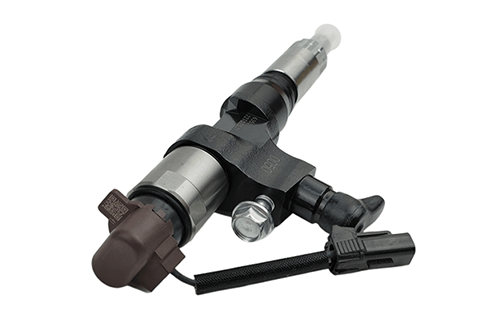
· Electronic injectors — one per cylinder, each with its own high-speed solenoid or piezo valve.
· The ECU — the coordinator that ties the whole loop together.
The Working Principle: One Closed Loop
Sensing the Engine's State
The common rail ECU continuously reads driver demand, engine speed, load, temperatures and boost. From those inputs it picks a target: the rail pressure, injection timing, quantity and rate that best fit the moment.
Pressure Control: the First Half of the Loop
The ECU drives the fuel metering unit to admit more or less fuel into the pump. The pump pressurizes it, the rail stores it, and the pressure sensor reports back. That feedback closes the loop: actual pressure is compared against target dozens of times per second, and the metering valve trims the flow until the two match. This is closed loop fuel pressure control in its purest form — and it's why rail pressure holds steady from idle to redline.
Injection Control: the Second Half
With pressure locked in, the ECU fires each injector with a precisely shaped electrical pulse. The quantity delivered depends on rail pressure × valve open time, so the same hardware delivers a whisper of fuel at idle or a full-power shot under load. Timing, meanwhile, is tied to crank and cam position signals, keeping every event locked to the correct piston stroke.
What This Buys You on the Road
The payoff of closing both loops is flexibility the old diesel fuel supply system never had:
· Injection pressure is matched to the operating condition — low and quiet at idle, high and powerful under load.
· Pilot injection softens combustion noise; multiple events sharpen response while holding NOx and soot down.
· Each cylinder gets metered fuel with tiny variation, so the engine runs smoother and vibrates less.
Put together, that's how a modern diesel keeps its traditional advantages — roughly 30% lower fuel consumption than a comparable gasoline engine, strong low-rpm torque, cheaper fuel — while shedding most of the smoke and clatter.
Keeping the System Healthy
Common rail hardware is robust, but it has one Achilles' heel: cleanliness. Micron-tight injector clearances and 2,000-bar fuel leave no room for debris or water. The unglamorous habits — quality fuel, filter changes on schedule, never running the tank dry — prevent the majority of expensive failures. If a fault does appear, scan for rail-pressure codes first: the metering valve and pressure sensor are the usual suspects, not the pump.
Frequently Asked Questions
What does the fuel metering unit actually do?
It throttles the high-pressure pump's inlet. By controlling how much fuel the pump compresses, it sets rail pressure — under the ECU's constant supervision.
Is the system still mechanical at its core?
The pump and injectors are hydraulic hardware, but nothing about pressure or timing is left to mechanics. Every key variable is computed and verified electronically.
What are typical failure symptoms?
Limp mode with rail-pressure fault codes, long cranking before start, power loss under load, and rough running — usually traced to the metering unit, sensor or a worn injector.
The Bottom Line
A diesel common rail system works because sensing, computing and hydraulic hardware form one tight loop. Keep the fuel clean, respect the service schedule, and the system rewards you with the efficiency and torque diesel is famous for — minus the drawbacks.