
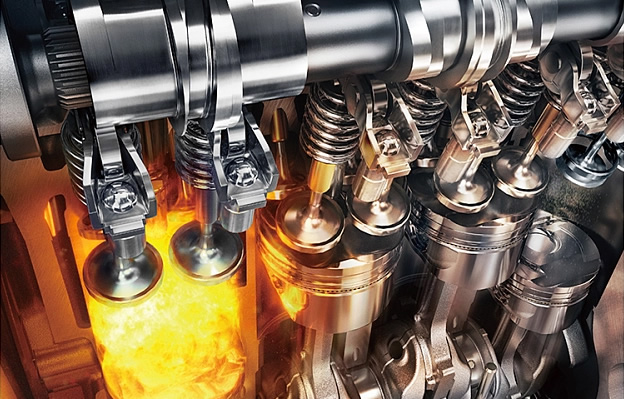
What's inside a common rail fuel system? See how the high-pressure pump, fuel rail, injectors and ECU work together — and why old diesel pumps can't compete.
What Is a High-Pressure Common Rail Fuel System?
If you've ever wondered why a modern diesel engine runs quieter, pulls harder and emits far less black smoke than the trucks of the 1990s, the answer is usually hidden in the fuel system. The common rail fuel system swapped the old cam-driven unit pumps for something that behaves more like a hydraulic computer: it builds pressure, stores it, and hands each injector exactly the dose it needs, exactly when it needs it.
At its core, this is an electronically controlled setup in which pressure generation and fuel injection are two fully separate events. A pump pressurizes the fuel — typically to 120–200 MPa (about 1,200–2,000 bar) — and a shared tube called the common rail holds that pressure steady. Every injector taps into the same rail, so rail pressure no longer rises and falls with engine speed the way it did on mechanical systems.
The 5 Main Components of a Common Rail Fuel System
1. High-Pressure Fuel Pump
The high pressure fuel pump is the muscle of the system. Here's the elegant part: because injection timing no longer depends on the pump's cam, engineers can shape the cam profile purely for low peak torque, minimal contact stress and long wear life. The pump only has to deliver the total of injection quantity plus control oil — even during a cold start or a hard pull uphill.
2. The Common Rail (Fuel Accumulator)
The rail is essentially a pressure reservoir. It absorbs the pulsing flow coming from the pump and gives the injectors a stable, bubble-free supply. Mounted on it you'll find the fuel rail pressure sensor, which reports real-time pressure back to the ECU. A pressure relief valve protects the rail if pressure ever climbs past its limit.
3. Electronic Fuel Injectors
Each cylinder gets its own electronically controlled injector with a fast solenoid or piezo valve inside. This is the component that actually decides when injection starts, how long it lasts and how fuel is broken into multiple events per cycle — the trick that lets modern diesels run both clean and strong.
4. Electronic Control Unit (ECU)
The electronic control unit diesel brains read signals from the accelerator pedal, crankshaft and camshaft position sensors, boost pressure, coolant and intake temperature. From that data it calculates the target rail pressure, injection timing and quantity for the current driving condition — dozens of times per second.
5. Fuel Metering Unit (Pressure Control Valve)
Sitting on the inlet side of the high-pressure pump, the fuel metering unit regulates how much fuel the pump is allowed to compress. Together with the rail pressure sensor and the ECU, it forms a closed loop that holds rail pressure exactly on target, whether the engine is idling or running flat out.
Why the Common Rail Beat the Old Mechanical Pump
· Pressure adapts to the job — full injection pressure is available even at low rpm, not just at peak power.
· Timing and fuel quantity are controlled independently**, which lets the ECU balance power against NOx and particulate emissions.
· Pilot and multiple injections soften combustion noise and clean up the exhaust.
· Metering is precise from cylinder to cylinder, so the engine runs smoother and vibrates less.
Frequently Asked Questions
What pressure does a common rail fuel system run at?
Most passenger-car and truck systems operate between 120 and 200 MPa, with some of the latest systems pushing beyond 2,500 bar.
Which component usually fails first?
Injectors and the metering unit see the most punishment. Fine internal tolerances mean dirty fuel or neglected filters wear them out faster than anything else.
Can the engine run if the rail pressure sensor fails?
Only in a limp mode. The ECU can no longer verify actual pressure, so it limits output to protect the pump and injectors.
The Bottom Line
Once you understand these five components, diagnosing a CRDI fuel system stops being guesswork. If you're chasing a rail-pressure fault, check the metering valve and the pressure sensor before condemning the pump — in practice, that's where most problems turn out to be.