
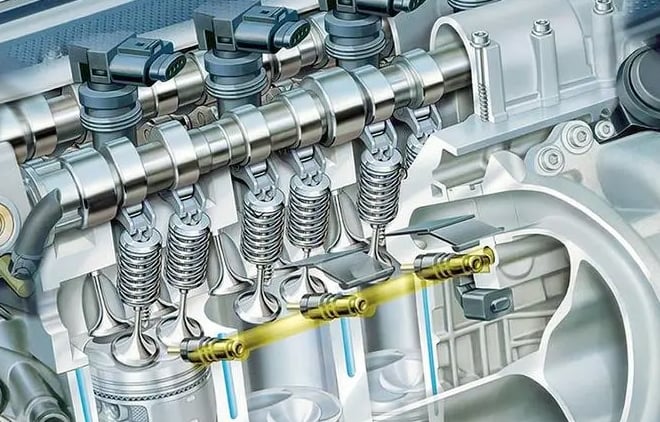
Passenger car and light commercial diesel engines rely on electronic rail control. The typical symptoms, the components behind them and how to plan replacement.
Passenger car and light commercial diesel engines moved to electronic common rail because it allows injection pressure, timing and quantity to be mapped against load, engine speed and the requirements of the exhaust aftertreatment. The injector is opened by a solenoid or a piezo stack, and the engine controller trims each cylinder against the crank and cam signals.
What the driver notices first
Rough idle, a single-cylinder misfire and a hard hot start are the usual complaints. On the bench these show up as excessive injector return flow or a distorted spray pattern. High-pressure pump wear appears earlier in the fuel filter, as metal particles, than at the injector, and it shows as rail pressure that will not build while cranking.
Reading the return flow
Return flow is the cheapest measurement that separates a worn injector from a worn pump. A back-leak test on a warm engine shows which cylinder is passing fuel back to the tank instead of injecting it. An injector that returns too much cannot hold rail pressure at high load even when its electrical values are correct.
Planning the replacement
On high-mileage engines injectors are usually replaced as a set, because a single new injector next to five worn ones leaves the controller compensating for the difference. Coding the new injector values into the controller is part of the job: without the codes the engine runs, but the quantity correction stays at the default.